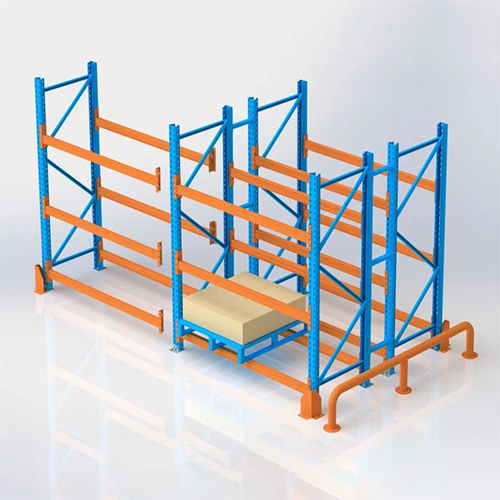

Warehouses need more than open floor space to operate efficiently. The right storage system helps businesses organize inventory, improve accessibility, reduce wasted space, and handle heavy materials safely. For companies operating in Delhi and across India, steel-based storage systems are a practical choice because they can be customized according to load requirements, available space, and the type of goods being stored.
What Is the Best Storage System for a Warehouse?
The best option depends on the size of the warehouse, the weight of the goods, available floor space, and how frequently items need to be accessed. Heavy-duty pallet systems are suitable for large and bulky inventory, while slotted-angle and multi-tier shelving can work well for cartons, components, tools, and smaller products.
A well-planned setup allows businesses to use vertical space instead of spreading inventory across the floor. This can make movement easier while creating a more systematic working environment.
Why Are Steel Storage Structures Popular in Warehouses?
Steel is widely used for industrial storage because of its strength, stability, and long service life. Properly designed frames can support substantial loads while maintaining structural rigidity during everyday warehouse operations.
Steel shelving is particularly useful when a business needs dependable storage that can withstand regular loading and unloading.
Other advantages include:
- Strong construction for demanding applications
- Adjustable shelf configurations
- Efficient use of vertical space
- Powder-coated or painted finishes for improved durability
- Custom dimensions according to warehouse layouts
- Suitable designs for factories, retail facilities, and distribution centers
How Do Industrial Shelving Systems Improve Warehouse Organization?
A properly arranged shelving system gives every category of inventory a defined location, making products easier to find, move, and count.
Without an organized structure, goods can accumulate on floors, in corners, or in temporary storage areas. This can increase handling time and make stock management difficult.
Industrial shelving creates designated levels for different products. Shelves can also be configured at suitable heights so that frequently used items remain accessible while less frequently required materials can be stored higher up.
For growing businesses, this organization becomes even more valuable because storage requirements can change over time.
What Are Heavy-Duty Pallet Systems Used For?
Heavy-duty pallet storage is designed for warehouses that handle large, heavy, or palletized goods.
These structures typically use strong steel frames and beams to accommodate substantial loads. They are commonly found in logistics facilities, manufacturing units, distribution centers, and large inventory warehouses.
A major benefit is the ability to utilize vertical height. Instead of occupying additional floor area for every pallet, goods can be positioned at different levels.
For example, a warehouse with a tall ceiling can potentially increase its storage capacity by using multiple vertical levels rather than relying only on floor storage.
When Should You Choose Slotted-Angle Shelving?
Slotted-angle shelving is a practical choice when flexibility and easy adjustment are important.
Its modular design allows shelves to be positioned according to the dimensions of the products being stored. This makes it useful for cartons, spare parts, documents, tools, packaged goods, and other relatively smaller items.
It can also be useful for businesses that frequently change their inventory. Rather than installing a completely different system, shelf levels can often be adjusted to accommodate new requirements.
This type of arrangement is commonly used in warehouses, workshops, stores, and industrial facilities where organized manual picking is required.
Can Storage Racks Be Customized for Different Warehouses?
Yes. Customization is one of the most important advantages of modern industrial storage equipment.
Every warehouse has different dimensions, ceiling heights, aisle requirements, product sizes, and load conditions. A standard design may therefore not make the best use of the available area.
Manufacturers can provide customized specifications such as:
- Rack height and width
- Shelf depth
- Number of storage levels
- Load-bearing capacity
- Material thickness
- Finish and color
- Configuration according to floor space
- Special arrangements for particular products
Customization helps businesses create a storage layout that fits their actual operational requirements rather than forcing the warehouse to adapt to an unsuitable standard size.
How Does Warehouse Storage Equipment Help Save Space?
The biggest space-saving benefit comes from using the vertical area of the building.
Many warehouses have considerable unused space above the normal working level. Installing appropriately designed shelving or pallet structures allows inventory to be stored upward while keeping valuable floor space available for aisles, equipment, packing areas, and movement.
A compact layout can also reduce unnecessary gaps between storage locations. However, space efficiency should never come at the expense of safe access or appropriate aisle widths.
The goal should be to achieve a balance between storage density, accessibility, safety, and workflow.
What Should Businesses Consider Before Buying Storage Equipment?
Businesses should evaluate load capacity, warehouse dimensions, product characteristics, accessibility, material quality, and future expansion before selecting a storage solution.
The first consideration should be the weight and dimensions of the products. A system designed for lightweight cartons may not be appropriate for heavy machinery or palletized materials.
The available space should also be measured carefully. Ceiling height, column positions, doors, windows, electrical installations, and movement paths can all influence the final design.
It is also worth considering future inventory growth. A storage system that works today may become inadequate as the business expands, so modular and adjustable solutions can provide greater long-term flexibility.
Why Is Surface Finish Important for Industrial Storage?
A durable finish helps protect metal surfaces from everyday wear and environmental exposure.
Powder coating and suitable painted finishes are commonly used on steel storage equipment. These finishes can improve the appearance of the structure while providing an additional protective layer.
For warehouses where equipment is regularly handled, a good surface finish can help maintain the condition of the storage system over time.
Businesses should nevertheless consider the warehouse environment when selecting materials and finishes, particularly where humidity, chemicals, dust, or other challenging conditions are present.
Why Choose an Experienced Storage Equipment Manufacturer?
An experienced manufacturer can help businesses select, customize, and produce storage systems according to their actual operational requirements.
Manufacturing quality depends not only on the final assembly but also on processes such as material selection, punching, profiling, surface preparation, welding, finishing, and packaging.
A structured production process helps ensure that components are manufactured consistently and prepared properly before delivery.
Reliable packaging and transportation are also important because storage equipment needs to arrive without unnecessary scratches, dents, or damage.
Conclusion
A well-designed warehouse storage system can improve organization, maximize available space, simplify inventory handling, and provide dependable support for everyday operations.
From adjustable shelving and slotted-angle designs to heavy-duty pallet structures, different solutions serve different warehouse requirements. The ideal choice should be based on product weight, dimensions, storage volume, accessibility, available space, and expected future growth.
For businesses looking to improve warehouse efficiency, investing in properly designed steel storage equipment can be a practical long-term decision. With customized dimensions, durable construction, suitable finishes, and an organized layout, warehouses can become easier to manage while making better use of every available square foot.