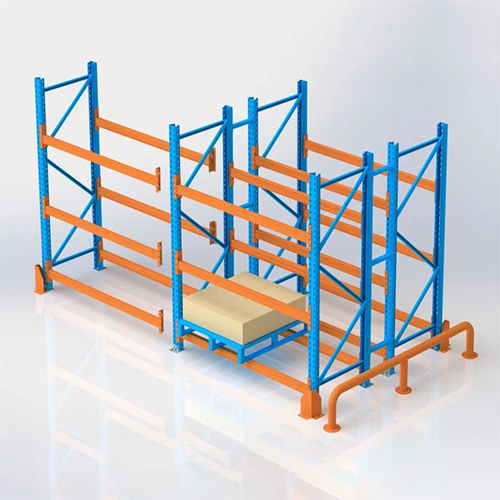

When warehouses and factories handle pallets, equipment, cartons, and other bulky materials, ordinary shelving may not provide the strength or flexibility required. Heavy-duty storage systems are designed to organize substantial loads while making better use of available warehouse space. With suitable materials, adjustable configurations, and customized dimensions, businesses can create a storage setup that supports everyday operations.
What Are Heavy-Duty Storage Racks?
Heavy-duty storage racks are robust steel structures designed to hold heavier materials, pallets, boxes, and equipment in warehouses, factories, and other industrial spaces.
These systems are built with strength and stability in mind, helping businesses store goods above the floor while maintaining an organized working environment. Depending on the application, businesses can select different configurations, including pallet racking and angle-frame designs.
The source material highlights mild steel and stainless steel as available material options, while dimensions, height, color, unit load capacity, and storage capacity can be customized according to requirements.
Why Are Heavy-Duty Racking Systems Important for Warehouses?
A strong storage structure helps warehouses handle heavy inventory more efficiently while keeping products organized and accessible.
When bulky goods are placed directly on the floor, valuable working space can quickly disappear. Properly designed racking allows inventory to be arranged vertically, creating clearer aisles and making it easier for warehouse teams to locate products.
For warehouses dealing with changing inventory, adjustable configurations can also provide greater flexibility. Businesses can modify storage arrangements according to product dimensions and operational requirements instead of relying on a fixed layout.
Key Benefits of Industrial Storage Structures
- High load-bearing capability for demanding storage applications
- Adjustable shelves for different product sizes
- Modular construction that can adapt as requirements change
- Rust-resistant finishes for improved long-term appearance and durability
- Customized dimensions according to available warehouse space
- Better organization of heavy materials and inventory
- Suitable configurations for warehouses, factories, and offices
What Materials Are Used in Heavy-Load Storage Systems?
Mild steel and stainless steel are identified as material options for these storage structures, providing a strong foundation for industrial applications.
Material selection depends on the intended use, environmental conditions, load requirements, and desired finish. Steel-based construction is particularly suitable for demanding storage environments where the structure needs to remain stable during regular loading and unloading.
The manufacturing process described in the source includes raw material selection, punching, profiling, shot blasting, welding, finishing, and packaging. Each stage contributes to preparing the final storage product for delivery and use.
Can Storage Racks Be Customized?
Yes, the storage systems described in the source can be customized in terms of height, unit size, color, load capacity, and overall storage capacity.
Customization is useful because warehouses rarely have identical layouts or inventory requirements. A facility may have limited floor space but considerable vertical height, while another may need wider shelves for bulky products.
Customized dimensions allow the storage arrangement to fit the available area more effectively. Businesses can also select configurations based on the type and weight of the materials they need to store.
The source also indicates customized frame load capacity and storage capacity for its heavy-duty rack system.
What Types of Heavy-Duty Storage Systems Are Available?
Different configurations can be selected depending on the products, load requirements, and way the warehouse operates.
The supplied information identifies pallet racking and angle-frame racks as types available within the heavy-duty rack system. The listed system can have different numbers of layers, with example load capacities per layer ranging from 0–50 kg, 50–100 kg, and 100–150 kg depending on the configuration.
This means businesses should select a system according to their actual requirements rather than assuming one rack design will suit every application.
For large palletized inventory, pallet racking can be appropriate. For other warehouse or office applications, angle-frame configurations may provide a practical alternative.
How Do Adjustable Shelves Make Storage Easier?
Adjustable shelves allow businesses to change the storage arrangement when product sizes or inventory requirements change.
Warehouses often contain items with different dimensions. Fixed shelving can leave unused vertical gaps or make it difficult to accommodate larger products.
Adjustable arrangements provide more flexibility by allowing shelf positions to be changed according to the goods being stored. This can help businesses make better use of vertical space while keeping frequently handled items accessible.
For companies experiencing changing storage requirements, a modular system can also reduce the need to completely replace the existing setup.
Why Is Rust Resistance Important?
A rust-resistant coating helps protect the rack surface and maintain its condition during long-term use.
Industrial storage equipment can be exposed to dust, moisture, and frequent handling. A suitable protective finish can help maintain the appearance of the steel structure and provide an additional layer of protection.
The supplied information specifically highlights rust-resistant coating as one of the features valued by businesses using these systems.
The finishing stage is also included in the described manufacturing process, following welding and other fabrication operations.
What Should You Consider Before Selecting a Heavy-Load Rack?
Businesses should consider load requirements, product dimensions, available space, rack height, material, shelf configuration, and future storage needs before making a selection.
The first step should be understanding what will actually be stored. Heavy pallets require a different approach from smaller boxes, tools, or office supplies.
Warehouse dimensions are equally important. The available floor area and vertical height should be considered so the system can provide useful capacity without creating unnecessary obstacles.
Businesses should also think about future changes. A modular and adjustable structure can be more practical when inventory levels or product sizes are expected to change.
How Does the Manufacturing Process Affect Rack Quality?
A structured manufacturing process helps ensure that the storage equipment is prepared through multiple stages before it reaches the customer.
The supplied information describes several stages:
- Raw Material: High-quality raw materials are selected for manufacturing.
- Punching Process: Materials are punched and prepared for the required product configuration.
- Profiling Process: Steel components are shaped according to the intended design.
- Shot Blasting: Surfaces are cleaned and prepared before further treatment.
- Welding Process: Components are joined through welding.
- Finishing: The completed structure receives its final finish.
- Packaging: Products are packed securely before dispatch.
- Delivery: Finished products are delivered to customers.
Following these stages helps create a systematic approach from material preparation through final dispatch.
Are These Storage Systems Suitable for Different Industries?
Yes, the supplied information indicates applications across warehouses, industries, factories, and offices, depending on the selected configuration.
Heavy-load storage is particularly useful where businesses need to organize substantial inventory or equipment. Different rack configurations can accommodate different storage requirements, making the systems adaptable to a range of working environments.
The source also references related solutions such as industrial racks, steel racks, warehouse storage systems, cantilever racks, medium-duty systems, industrial shelving, godown storage systems, and warehouse rack storage systems.
This range allows businesses to consider their specific application instead of selecting a storage structure based only on load capacity.
Why Choose a Local Supplier or Dealer?
Working with a nearby supplier or dealer can make product selection, availability, installation support, and replacement requirements more convenient.
The supplied information emphasizes local support in Delhi, including guidance on choosing suitable storage equipment, access to stock for urgent requirements, and assistance with additional shelves, accessories, or spare parts.
For businesses that need storage equipment quickly, local availability can also reduce unnecessary waiting and transportation-related difficulties.
Conclusion
Heavy-duty storage systems provide a practical way to organize heavy inventory, use warehouse space more effectively, and adapt storage arrangements to changing business requirements.
With steel construction, adjustable shelves, modular designs, protective finishes, and customized dimensions, these systems can be configured for different warehouse and industrial applications. Businesses should evaluate their load requirements, product dimensions, available space, and future needs before selecting the right configuration.
A carefully planned storage setup can make everyday warehouse operations more organized and provide a dependable foundation for handling heavy materials. For businesses in Delhi and across India, customized industrial storage solutions can help create a system that is suited to their specific operational requirements.