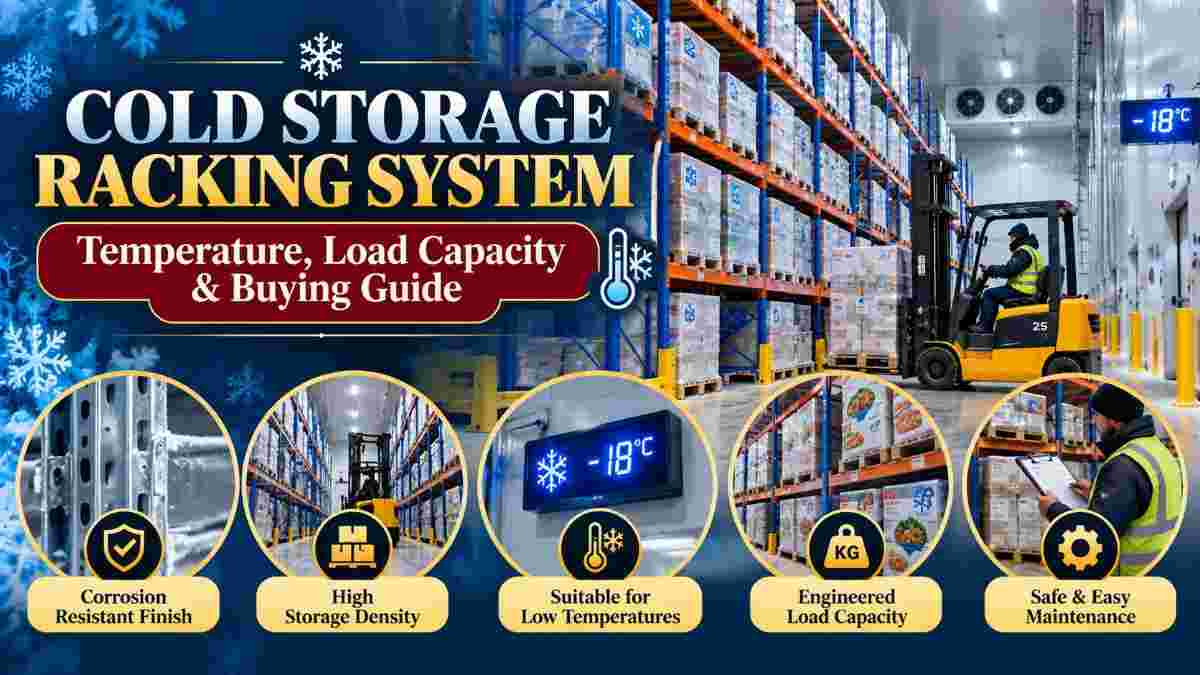
Are you planning a refrigerated warehouse for food products, pharmaceuticals, frozen goods, or temperature-sensitive inventory? Choosing the correct racking system is important for storage efficiency, product accessibility, and safe material handling.
A cold storage racking system should be selected according to operating temperature, pallet weight, storage density, corrosion protection, forklift access, airflow, and warehouse layout.
Unlike conventional warehouses, refrigerated facilities must account for condensation, frost, temperature changes, and limited working space.
Spanco Storage Systems manufactures industrial storage solutions, including cold storage racks designed for different warehouse requirements.
What Is a Cold Storage Racking System?
A cold storage racking system is a storage structure designed for organizing goods inside temperature-controlled warehouses and refrigerated facilities.
These systems may be used in:
-
Frozen food warehouses.
-
Dairy storage facilities.
-
Pharmaceutical distribution centers.
-
Cold-chain logistics operations.
-
Fruit and vegetable storage.
-
Food processing facilities.
Explore Cold Storage Racks for product information.
Why Do Refrigerated Warehouses Need Specialized Racking?
Refrigerated warehouses require racks suitable for low temperatures, condensation exposure, heavy loads, and temperature-controlled material handling.
Important challenges include:
-
Low operating temperatures.
-
Condensation and frost.
-
Potential corrosion.
-
Restricted forklift movement.
-
Air circulation requirements.
-
High storage density.
-
Frequent loading and unloading.
The system must accommodate these conditions without compromising structural performance.
Which Types of Racking Systems Are Suitable for Cold Storage?
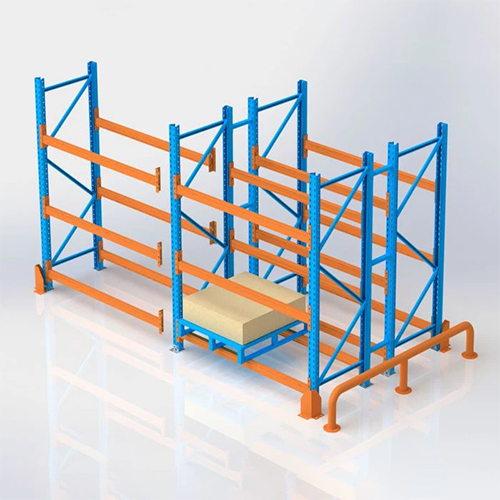
Common options include selective pallet racking, double-deep racking, drive-in systems, and pallet-flow racks.
When Should You Choose Selective Pallet Racking?
Selective pallet racking is suitable when warehouse operators need direct access to individual pallet positions.
It can support facilities handling multiple product categories or frequent inventory movements.
Review Pallet Racking Systems for related configurations.
When Should You Choose Double-Deep Racking?
Double-deep racking can increase storage density by positioning pallets two positions deep, but it requires compatible handling equipment.
It may be considered when warehouse operators can accept reduced direct pallet accessibility.
When Should You Choose Drive-In Racking?
Drive-in racking can provide high-density storage by allowing forklifts to enter designated rack lanes.
However, its suitability depends on stock rotation, forklift compatibility, and operational safety.
How Does Operating Temperature Affect Cold Storage Rack Selection?
Operating temperature affects material selection, protective finishes, and the suitability of racking components.
Before purchasing, confirm:
-
Normal operating temperature.
-
Minimum expected temperature.
-
Temperature fluctuations.
-
Defrosting conditions.
-
Moisture exposure.
-
Cleaning procedures.
For freezing environments, structural materials and components must be evaluated for low-temperature performance.
Which Materials Are Suitable for Cold Storage Racks?
Steel racking systems with suitable corrosion protection are commonly considered for refrigerated warehouses.
Material requirements depend on operating conditions.
Important considerations include:
-
Steel specifications.
-
Galvanized finishes.
-
Protective coating compatibility.
-
Moisture exposure.
-
Cleaning chemicals.
-
Structural loading.
Spanco Storage Systems lists galvanized finishes for its cold-storage and humid-duty configurations.
The final finish should match the actual application requirements.
Why Is Corrosion Protection Important in Refrigerated Warehouses?
Corrosion protection is important because condensation, cleaning operations, and temperature cycling can expose steel components to moisture.
Potential problems include:
-
Surface rust.
-
Coating deterioration.
-
Corrosion around connections.
-
Damage to structural components.
-
Increased maintenance requirements.
Regular inspections and suitable protective finishes help manage these risks.
How Do You Calculate Cold Storage Rack Load Capacity?
Rack capacity should be determined using maximum loaded pallet weight, pallet dimensions, load distribution, and the engineered rack configuration.
Important specifications include:
-
Maximum pallet weight.
-
Pallet length and width.
-
Number of pallets per level.
-
Number of storage levels.
-
Beam span.
-
Upright configuration.
-
Warehouse floor capacity.
Request load ratings and approved drawings from the manufacturer.
Never estimate capacity solely from the rack's appearance.
How Does Airflow Affect Cold Storage Rack Layout?
Airflow affects temperature distribution, so racking should be arranged without obstructing the refrigerated warehouse's designed air circulation.
Consider:
-
Evaporator locations.
-
Supply and return airflow.
-
Pallet placement.
-
Wall clearances.
-
Ceiling clearances.
-
Product stacking.
-
Refrigeration equipment access.
The refrigeration designer should verify the required clearances for the complete facility.
How Do You Plan Forklift Aisles in Cold Storage Warehouses?
Forklift aisles should be planned according to the handling equipment, pallet dimensions, turning requirements, and operating conditions.
Check:
-
Forklift type.
-
Required turning space.
-
Lift height.
-
Pallet dimensions.
-
Aisle configuration.
-
Floor condition.
-
Visibility.
-
Pedestrian access.
Do not reduce aisle widths below equipment and safety requirements simply to increase pallet positions.
How Can You Reduce Condensation Problems Around Cold Storage Racks?
Condensation risks can be reduced through suitable humidity control, door management, insulation, and refrigeration-system design.
Important measures include:
-
Limiting warm-air infiltration.
-
Maintaining door seals.
-
Managing humidity.
-
Providing appropriate drainage.
-
Monitoring frost formation.
-
Inspecting vulnerable rack components.
Racking alone cannot solve problems caused by inadequate refrigeration or building insulation.
What Maintenance Do Cold Storage Racks Require?
Cold storage racks need regular inspection for structural damage, corrosion, loose components, forklift impacts, and unsafe loading.
A maintenance checklist should include:
-
Inspect uprights and beams.
-
Check connections.
-
Look for corrosion.
-
Inspect floor anchors.
-
Identify forklift impact damage.
-
Verify load signs.
-
Check pallet condition.
-
Monitor condensation-related deterioration.
Damaged rack sections should be assessed before continued use.
What Factors Affect Cold Storage Racking System Prices?
Prices depend on rack type, material specifications, pallet capacity, warehouse dimensions, protective finishes, and installation requirements.
Cost factors include:
-
Storage capacity.
-
Rack height.
-
Number of levels.
-
Steel requirements.
-
Corrosion protection.
-
Handling equipment compatibility.
-
Transportation.
-
Installation.
Compare complete engineered quotations rather than individual rack prices.
What Should You Include in a Cold Storage Racking RFQ?
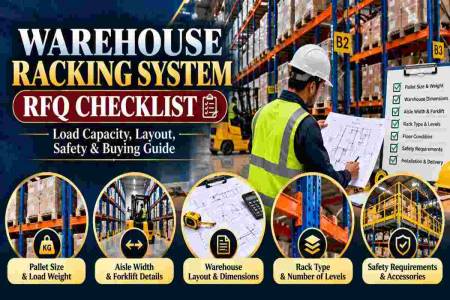
A cold storage racking quotation request should include warehouse dimensions, operating temperatures, pallet specifications, equipment details, and required storage capacity.
Provide:
-
Project location.
-
Warehouse floor plan.
-
Clear height.
-
Operating temperature range.
-
Pallet dimensions.
-
Maximum loaded pallet weight.
-
Required pallet positions.
-
Forklift specifications.
-
Inventory rotation requirements.
-
Corrosion protection requirements.
-
Installation scope.
-
Delivery schedule.
Detailed information helps manufacturers prepare suitable technical proposals.
Why Should Buyers Consider Spanco Storage Systems for Cold Storage Racks?
Spanco Storage Systems manufactures made-to-order industrial racking configurations that buyers can evaluate for refrigerated warehouse applications.
Its website describes:
-
Steel rack construction.
-
Adjustable storage configurations.
-
Corrosion-resistant finish options.
-
Custom dimensions.
-
Application-specific loading requirements.
Explore Cold Storage Racks and Pallet Racking Systems for related products.
Final specifications should be confirmed against approved drawings and quotations.
What Are the Most Frequently Asked Questions About Cold Storage Racking Systems?
Common questions concern materials, temperatures, load ratings, forklift access, and maintenance.
Can Regular Warehouse Racks Be Used in Cold Storage?
Potentially, but their materials, protective finishes, connections, and design must be evaluated for the actual temperature and moisture conditions.
Are Galvanized Racks Suitable for Cold Storage?
Galvanized racks can be suitable for certain refrigerated applications when the coating and complete system meet the operating requirements.
Which Racking System Provides High Storage Density?
Drive-in and certain double-deep configurations can increase storage density, depending on inventory requirements and handling equipment.
Do Cold Storage Racks Need Regular Inspection?
Yes. Structural damage, corrosion, forklift impacts, and unsafe loading must be monitored.
Can Cold Storage Racks Be Customized?
Yes. Manufacturers may provide custom dimensions and configurations based on approved engineering specifications.
How Can You Request Cold Storage Racks From Spanco Storage Systems?
You can request cold storage racks by sharing your warehouse layout, temperature range, pallet dimensions, maximum load, and handling requirements.
For refrigerated warehouses, selecting the appropriate racking system requires coordination between storage design, refrigeration engineering, and warehouse operations.
Explore Cold Storage Racks or contact Spanco Storage Systems to discuss your project and request a quotation.
Technical Note: Cold storage racks should be designed for the actual loads, environmental conditions, floor capacity, handling equipment, and applicable safety requirements.