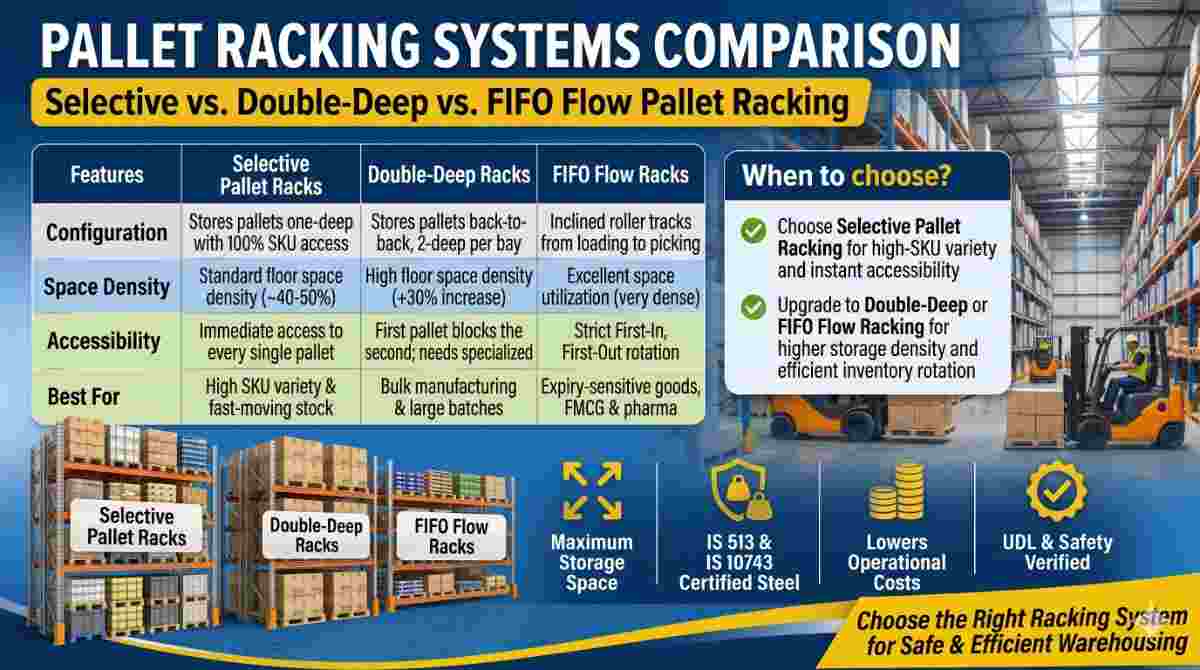
How do selective, double-deep, and FIFO flow pallet racks differ in storage density and SKU accessibility?
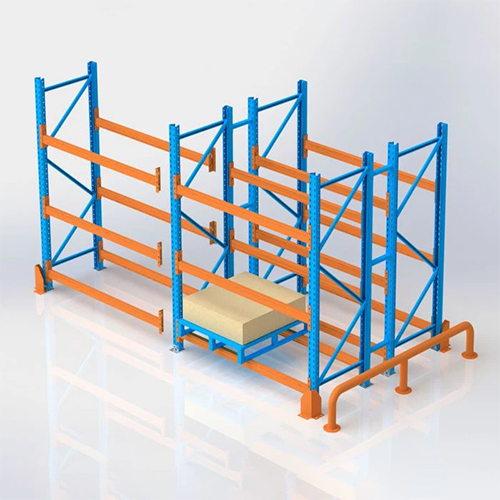
Selective, double-deep, and FIFO (First-In, First-Out) flow pallet racking systems differ primarily in how many pallets sit deep per bay, how directly forklifts access individual SKUs, and how inventory rotates. Selective racking offers 100% immediate access to every pallet one-deep, double-deep racking stores two pallets back-to-back to increase floor density by up to 30%, and FIFO flow racking uses inclined roller tracks to move pallets automatically from the loading aisle to the picking aisle.
Selecting the right configuration balances storage volume against picking speed across distribution centers, cold storages, and manufacturing plants. When sourcing heavy-duty pallet racking systems from Spanco Storage Systems, matching rack depth and aisle layout to your SKU count ensures maximum cubic utilization without slowing down forklift turnaround.
Which pallet racking system works best for expiry-sensitive stock versus bulk manufacturing pallets?
FIFO flow racking works best for expiry-sensitive inventory in FMCG, food, beverage, and pharmaceutical warehouses because pallets loaded at the rear automatically roll forward to the picking face, guaranteeing that older stock exits first. Conversely, double-deep racking suits bulk manufacturing and homogeneous pallet storage with multiple pallets per SKU, while selective pallet racks remain ideal for high-SKU-variety warehouses requiring instant access to every single pallet.
Relying on standard static bays for fast-moving, perishable goods forces operators to manually shuffle pallets, increasing labor hours and expired stock write-offs. Installing dedicated industrial FIFO racks builds automatic stock rotation directly into the steel structure, whereas double-deep pallet racking eliminates extra forklift aisles when storing large batches of identical goods.
How do beam span, UDL load rating, and forklift aisle width affect rack selection?
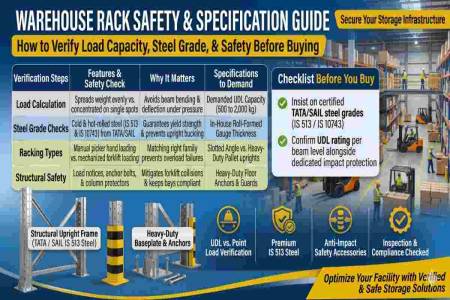
Beam span, Uniformly Distributed Load (UDL) capacity, and forklift reach determine both structural safety and total pallet capacity per square foot. Standard heavy-duty pallet beams handle 500 kg to 2,000 kg UDL across spans of 1,500 mm to 3,000 mm with 75 mm vertical pitch adjustability, while aisle widths range from 2.8–3.5 meters for counterbalance and reach trucks, with double-deep layouts requiring telescopic pantograph forks to reach the second pallet position.
Underestimating point loads or forgetting to account for forklift mast clearance can overload beam connectors and cause upright impacts. Choosing certified heavy-duty pallet racks manufactured from high-tensile TATA and SAIL steel (IS 513 and IS 10743) ensures every beam level supports its rated load safely across frame heights from 3,000 mm to 6,000 mm.
What four measurements should warehouse managers share before requesting a custom racking layout and quote?
Before requesting a racking quotation, warehouse managers should measure four critical inputs: the heaviest pallet weight per level (UDL vs. point load), the exact pallet footprint (length, width, and loaded height), the clear ceiling height from the floor to the lowest truss or sprinkler obstruction, and the specific material-handling equipment (hand pallet truck, stacker, reach truck, or counterbalance forklift) operating in the aisles.
Sharing these four numbers allows racking engineers to calculate exact upright gauges, beam profiles, and aisle clearances while avoiding costly layout revisions. Facility planners can also review spacing strategies and load guidelines on the Spanco Storage Systems blog before finalizing warehouse floor plans.
How can warehouses and industrial buyers request a custom pallet racking layout and quote?
Warehouses, 3PL operators, and industrial manufacturers can share their floor dimensions, pallet weights, and target storage capacity to receive a drawing-backed layout and weight-based quotation. Because bolted modular racks require zero site welding, systems can be installed rapidly by in-house teams and later dismantled or reconfigured as inventory profiles evolve.
Whether you are setting up a new distribution hub in Delhi NCR or expanding a manufacturing facility anywhere in India, you can request a custom racking layout and quote with your four key measurements to get tailored engineering specifications and delivery timelines.