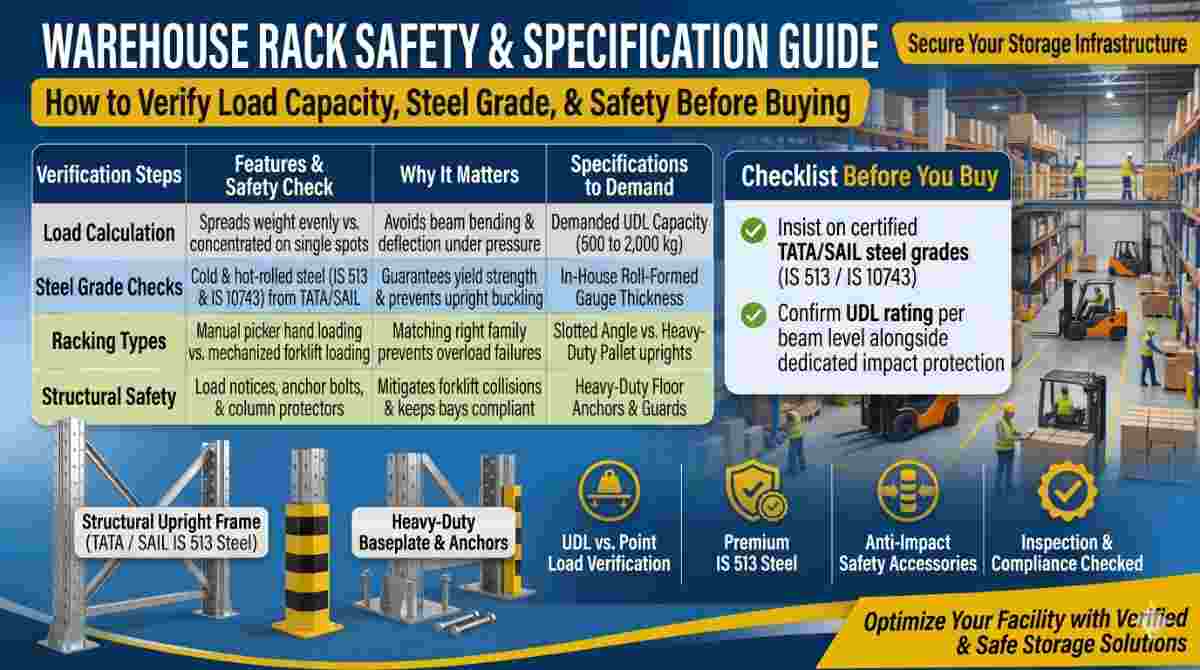
What is the difference between Uniformly Distributed Load (UDL) and point load on a rack beam?
Uniformly Distributed Load (UDL) means the total weight is spread evenly across the entire length of a rack beam or shelf, whereas a point load concentrates heavy weight onto one or two small contact spots near the center of the span. Because concentrated mid-span pressure creates higher bending stress, a beam rated for 1,500 kg UDL can deflect or fail under a much lighter point load.
Clarifying how pallets, dies, or machinery sit on your beams prevents dangerous deflection and connector fatigue across high-density facilities. When sourcing heavy-duty steel racks from Spanco Storage Systems, sharing exact pallet footprints and load contact points allows engineers to size beam profiles safely rather than relying on generic weight estimates.
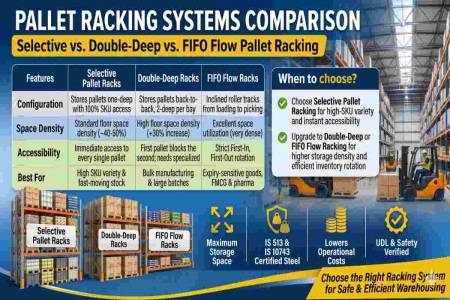
Why do TATA/SAIL steel grades (IS 513 and IS 10743) and upright thickness prevent rack buckling?
Certified cold-rolled and hot-rolled coils from TATA Steel and SAIL conforming to IS 513 and IS 10743 provide consistent yield strength, uniform sheet thickness, and predictable roll-forming tolerances that prevent upright columns from twisting or buckling under multi-level loads. Under-gauge commercial scrap steel often varies in thickness and lacks the tensile integrity required to hold heavy vertical bay loads over time.
Working directly with an in-house manufacturer rather than a trading house guarantees that the steel gauge quoted on paper matches the roll-formed upright installed on your warehouse floor. Whether you are outfitting a distribution center with pallet racking systems or expanding an industrial plant, verified mill-grade raw material keeps frame capacities accurate from floor anchor to top beam.
How do slotted angle racks compare with heavy-duty upright frames for load and height?
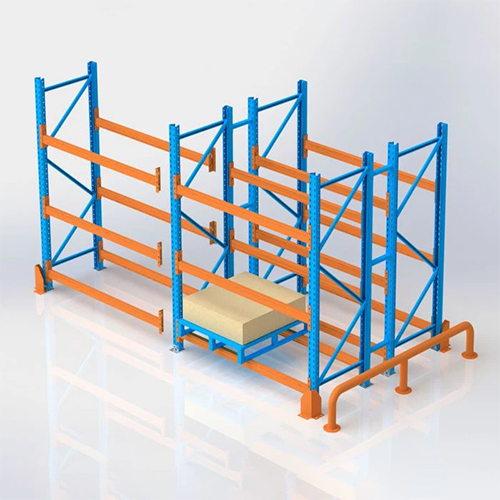
Slotted angle racks are designed for hand-loaded light and medium-duty storage—supporting 50 kg to 200 kg per shelf level across heights from 5 ft to 10.5 ft using 1.2 mm to 2.5 mm angle sections—whereas heavy-duty upright frames handle forklift-loaded pallet bays carrying 500 kg to 2,000 kg UDL per beam level across frame heights from 3,000 mm to 6,000 mm.
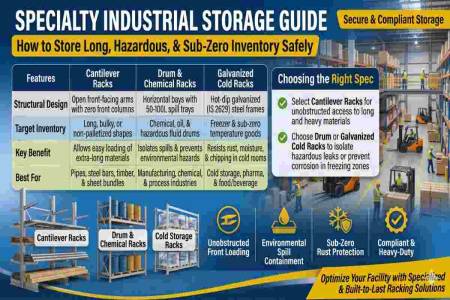
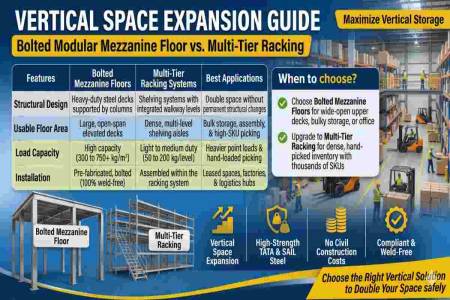
Matching the structural family to your material-handling method prevents dangerous overloading when warehouses transition from manual picking to stackers or forklifts. Installing slotted angle racks for spare parts, cartons, and archives while reserving roll-formed upright frames for palletized goods keeps both capital costs and floor safety balanced.
What load notices, floor anchors, column guards, and inspection checks keep a warehouse compliant?
Keeping a warehouse racking installation compliant requires displaying clear Maximum Load Capacity notices on every aisle end, securing all upright baseplates with heavy-duty floor anchor bolts, installing steel column guards and row-end barriers against forklift impacts, and conducting periodic visual inspections for bent uprights, dislodged safety locking pins, or damaged beam connectors.
Even a minor forklift collision at the base of an upright can reduce a bay's vertical load capacity by more than half if left unchecked. Maintenance and safety officers can review practical upkeep checklists on the Spanco Storage Systems blog to schedule routine torque checks, beam-level alignment audits, and prompt component replacements.
How should procurement teams verify specs and request a certified racking quote?
Procurement teams should request a drawing-backed quotation that explicitly states steel grade (IS 513 / IS 10743), upright and beam gauge thickness, UDL capacity per level, total bay frame capacity, powder-coating finish, and anchoring hardware. Sharing your four core site numbers—heaviest unit load, load footprint, clear ceiling height, and lifting equipment type—ensures an accurate engineering proposal.
Whether you need rate-contract supply by weight or turnkey installation across Delhi NCR and pan-India industrial hubs, you can request a custom racking quote with your dimensions and load requirements to receive certified specifications and ~2-week manufacturing lead times.