Pallet Rack Manufacturer in Jhajjar – Smart, Organized Storage
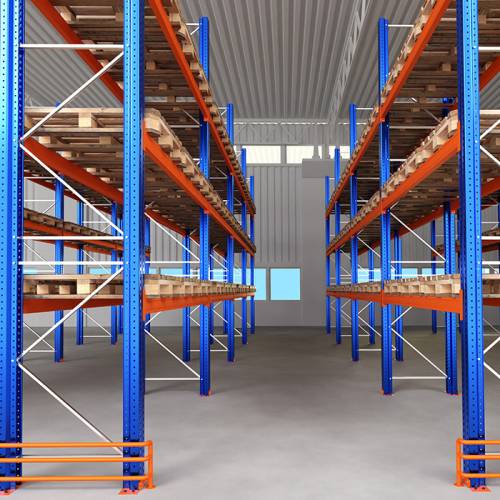
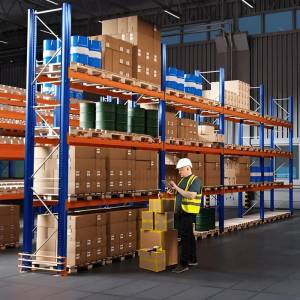
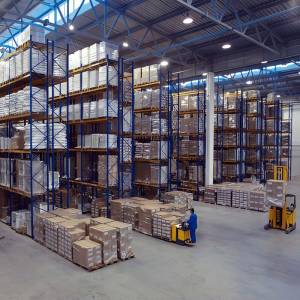
As a Pallet Rack Manufacturer, we understand that efficient storage is not about simply stacking pallets, but creating a flow of work. Our Pallet Racks are designed to carry heavy loads with safety in mind, as well as keeping your warehouse orderly. You will truly see how moving, picking, and storing stock will become so much easier when your Pallet Racks reflect the support of your operation in Jhajjar.
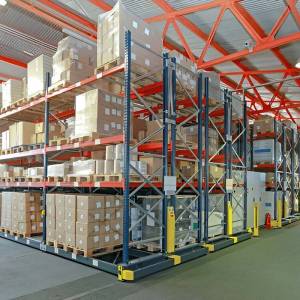
These racks are modular and customizable. You can easily modify the height and layout to fit your warehouse perfectly. A tall storage area, wide access area, or a combination of both with our Pallet Racks will serve your warehouse needs every day and also make them more efficient for your team.
Pallet Rack Dealer in Jhajjar – Local Access, Practical Guidance
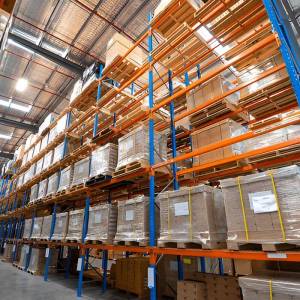
Being a Pallet Rack Dealer, we understand that there are situations when a business requires instant racks. We have Pallet Racks locally available, and you can implement them without having to wait weeks in Jhajjar.
Minor modifications, such as an increase or decrease in the height or distance between shelves, can lead to a large change in productivity, and our racks are accompanied with practical advice to ensure your warehouse workflow is flawless.
Pallet Rack Supplier in Jhajjar – Durable Storage That Lasts
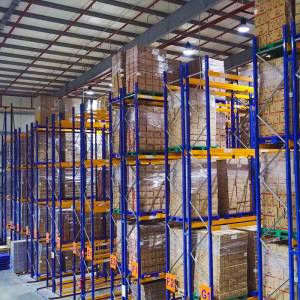
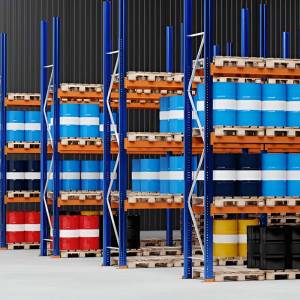
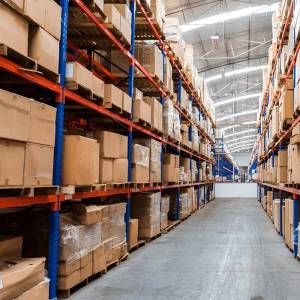
Warehouses need racks that can take heavy daily loads without giving way. As a Pallet Rack Supplier, we focus on strong, reliable, and long-lasting solutions. You might notice how much easier inventory management becomes when your racks are built for real-world demands in Jhajjar.
Our Pallet Racks are modular, rust-resistant, and designed to grow with your storage needs. Choosing us means investing in racks that support your operations today and tomorrow.
Specifications — Pallet Racking Systems
Spanco manufactures to order, so the figures below are the standard ranges
produced at the Bahadurgarh plant rather than a fixed catalogue size.
Final bay loading is confirmed against your pallet weight, bay width and
level configuration before drawings are issued.
Built to the ranges listed below — sizes are made to your bay.
Standard manufacturing ranges for Pallet Racking Systems
Beam span
1500 mm, 1800 mm, 2300 mm, 2700 mm or 3000 mm
Frame depth
600 mm, 900 mm, 1000 mm or 1200 mm
Frame height
3000 mm to 6000 mm standard; taller on survey
Load per beam level
500 kg to 2000 kg UDL, by beam section and span
Levels
Ground + 2 to ground + 4 typical
Material
Mild steel, CR/HR coil to IS 513 / IS 10743
Finish
Powder coated
Connection
Boltless beam-to-upright connector with safety pin
Configuration options
Mesh or MS panel decking
Pallet support bars
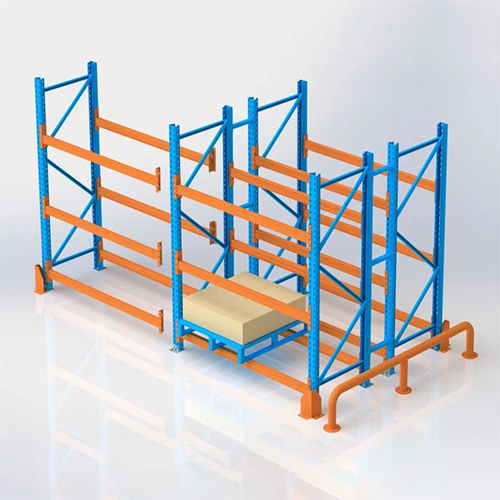
Column guards and end-of-aisle barriers
Double-deep configuration
Drive-in configuration
Row spacers for back-to-back runs
Questions buyers ask before ordering
What load can your Pallet Racks carry per level?
Our Pallet Racks are built from 500 kg to 2000 kg per beam level as a uniformly distributed load, with beam spans of 1500 to 3000 mm and frame depths of 600 to 1200 mm. The exact figure depends on the beam section and the span, so send us the heaviest pallet weight and how many pallets sit on one level.
What load can your Warehouse Pallet Racks carry per level?
Our Warehouse Pallet Racks are built from 500 kg to 2000 kg per beam level as a uniformly distributed load, with beam spans of 1500 to 3000 mm and frame depths of 600 to 1200 mm. The exact figure depends on the beam section and the span, so send us the heaviest pallet weight and how many pallets sit on one level.
What load can your Warehouse Pallet Storage Racks carry per level?
Our Warehouse Pallet Storage Racks are built from 500 kg to 2000 kg per beam level as a uniformly distributed load, with beam spans of 1500 to 3000 mm and frame depths of 600 to 1200 mm. The exact figure depends on the beam section and the span, so send us the heaviest pallet weight and how many pallets sit on one level.
What load can your Pallet Storage Racks carry per level?
Our Pallet Storage Racks are built from 500 kg to 2000 kg per beam level as a uniformly distributed load, with beam spans of 1500 to 3000 mm and frame depths of 600 to 1200 mm. The exact figure depends on the beam section and the span, so send us the heaviest pallet weight and how many pallets sit on one level.
What load can your Industrial Pallet Storage Racks carry per level?
Our Industrial Pallet Storage Racks are built from 500 kg to 2000 kg per beam level as a uniformly distributed load, with beam spans of 1500 to 3000 mm and frame depths of 600 to 1200 mm. The exact figure depends on the beam section and the span, so send us the heaviest pallet weight and how many pallets sit on one level.
What load can your Industrial Pallet Racks carry per level?
Our Industrial Pallet Racks are built from 500 kg to 2000 kg per beam level as a uniformly distributed load, with beam spans of 1500 to 3000 mm and frame depths of 600 to 1200 mm. The exact figure depends on the beam section and the span, so send us the heaviest pallet weight and how many pallets sit on one level.
What load can your Pallet Storage Racking Systems carry per level?
Our Pallet Storage Racking Systems are built from 500 kg to 2000 kg per beam level as a uniformly distributed load, with beam spans of 1500 to 3000 mm and frame depths of 600 to 1200 mm. The exact figure depends on the beam section and the span, so send us the heaviest pallet weight and how many pallets sit on one level.
What load can your Pallet Storage Systems carry per level?
Our Pallet Storage Systems are built from 500 kg to 2000 kg per beam level as a uniformly distributed load, with beam spans of 1500 to 3000 mm and frame depths of 600 to 1200 mm. The exact figure depends on the beam section and the span, so send us the heaviest pallet weight and how many pallets sit on one level.
What load can your Industrial Pallet Racking Systems carry per level?
Our Industrial Pallet Racking Systems are built from 500 kg to 2000 kg per beam level as a uniformly distributed load, with beam spans of 1500 to 3000 mm and frame depths of 600 to 1200 mm. The exact figure depends on the beam section and the span, so send us the heaviest pallet weight and how many pallets sit on one level.
What load can your Warehouse Pallet Racking Systems carry per level?
Our Warehouse Pallet Racking Systems are built from 500 kg to 2000 kg per beam level as a uniformly distributed load, with beam spans of 1500 to 3000 mm and frame depths of 600 to 1200 mm. The exact figure depends on the beam section and the span, so send us the heaviest pallet weight and how many pallets sit on one level.
How do I calculate the pallet rack capacity I need?
Start with the heaviest single pallet you will store, not the average. Multiply by the number of pallets that will sit on one beam level, which is usually two or three depending on beam span. That total is the figure the beam pair must carry as a uniformly distributed load. Then check the frame separately: add every level together and that is what the upright and its bracing must carry down to the floor. Our standard range is 500 kg to 2000 kg per beam level.
How do I calculate the pallet rack capacity I need?
Start with the heaviest single pallet you will store, not the average. Multiply by the number of pallets that will sit on one beam level, which is usually two or three depending on beam span. That total is the figure the beam pair must carry as a uniformly distributed load. Then check the frame separately: add every level together and that is what the upright and its bracing must carry down to the floor. Our standard range is 500 kg to 2000 kg per beam level.
How do I calculate the pallet rack capacity I need?
Start with the heaviest single pallet you will store, not the average. Multiply by the number of pallets that will sit on one beam level, which is usually two or three depending on beam span. That total is the figure the beam pair must carry as a uniformly distributed load. Then check the frame separately: add every level together and that is what the upright and its bracing must carry down to the floor. Our standard range is 500 kg to 2000 kg per beam level.
How do I calculate the pallet rack capacity I need?
Start with the heaviest single pallet you will store, not the average. Multiply by the number of pallets that will sit on one beam level, which is usually two or three depending on beam span. That total is the figure the beam pair must carry as a uniformly distributed load. Then check the frame separately: add every level together and that is what the upright and its bracing must carry down to the floor. Our standard range is 500 kg to 2000 kg per beam level.
How do I calculate the pallet rack capacity I need?
Start with the heaviest single pallet you will store, not the average. Multiply by the number of pallets that will sit on one beam level, which is usually two or three depending on beam span. That total is the figure the beam pair must carry as a uniformly distributed load. Then check the frame separately: add every level together and that is what the upright and its bracing must carry down to the floor. Our standard range is 500 kg to 2000 kg per beam level.
How do I calculate the pallet rack capacity I need?
Start with the heaviest single pallet you will store, not the average. Multiply by the number of pallets that will sit on one beam level, which is usually two or three depending on beam span. That total is the figure the beam pair must carry as a uniformly distributed load. Then check the frame separately: add every level together and that is what the upright and its bracing must carry down to the floor. Our standard range is 500 kg to 2000 kg per beam level.
How do I calculate the pallet rack capacity I need?
Start with the heaviest single pallet you will store, not the average. Multiply by the number of pallets that will sit on one beam level, which is usually two or three depending on beam span. That total is the figure the beam pair must carry as a uniformly distributed load. Then check the frame separately: add every level together and that is what the upright and its bracing must carry down to the floor. Our standard range is 500 kg to 2000 kg per beam level.
How do I calculate the pallet rack capacity I need?
Start with the heaviest single pallet you will store, not the average. Multiply by the number of pallets that will sit on one beam level, which is usually two or three depending on beam span. That total is the figure the beam pair must carry as a uniformly distributed load. Then check the frame separately: add every level together and that is what the upright and its bracing must carry down to the floor. Our standard range is 500 kg to 2000 kg per beam level.
How do I calculate the pallet rack capacity I need?
Start with the heaviest single pallet you will store, not the average. Multiply by the number of pallets that will sit on one beam level, which is usually two or three depending on beam span. That total is the figure the beam pair must carry as a uniformly distributed load. Then check the frame separately: add every level together and that is what the upright and its bracing must carry down to the floor. Our standard range is 500 kg to 2000 kg per beam level.
How do I calculate the pallet rack capacity I need?
Start with the heaviest single pallet you will store, not the average. Multiply by the number of pallets that will sit on one beam level, which is usually two or three depending on beam span. That total is the figure the beam pair must carry as a uniformly distributed load. Then check the frame separately: add every level together and that is what the upright and its bracing must carry down to the floor. Our standard range is 500 kg to 2000 kg per beam level.
What is the difference between selective, double-deep and drive-in pallet racking?
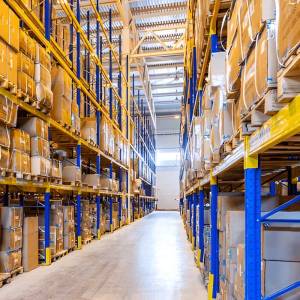
Selective gives you a clear aisle to every pallet, so any pallet can be picked at any time. Double-deep stores pallets two rows deep, which adds pallet positions in the same floor area but means the front pallet must be moved to reach the one behind, and it needs a double-reach truck. Drive-in lets the truck enter the rack structure itself and gives the highest density, but you lose selectivity entirely, so it suits a small number of SKUs held in quantity. Selective suits most operations; density systems pay off when you have few SKUs and many pallets of each.
What is the difference between selective, double-deep and drive-in pallet racking?
Selective gives you a clear aisle to every pallet, so any pallet can be picked at any time. Double-deep stores pallets two rows deep, which adds pallet positions in the same floor area but means the front pallet must be moved to reach the one behind, and it needs a double-reach truck. Drive-in lets the truck enter the rack structure itself and gives the highest density, but you lose selectivity entirely, so it suits a small number of SKUs held in quantity. Selective suits most operations; density systems pay off when you have few SKUs and many pallets of each.
What is the difference between selective, double-deep and drive-in pallet racking?
Selective gives you a clear aisle to every pallet, so any pallet can be picked at any time. Double-deep stores pallets two rows deep, which adds pallet positions in the same floor area but means the front pallet must be moved to reach the one behind, and it needs a double-reach truck. Drive-in lets the truck enter the rack structure itself and gives the highest density, but you lose selectivity entirely, so it suits a small number of SKUs held in quantity. Selective suits most operations; density systems pay off when you have few SKUs and many pallets of each.
What is the difference between selective, double-deep and drive-in pallet racking?
Selective gives you a clear aisle to every pallet, so any pallet can be picked at any time. Double-deep stores pallets two rows deep, which adds pallet positions in the same floor area but means the front pallet must be moved to reach the one behind, and it needs a double-reach truck. Drive-in lets the truck enter the rack structure itself and gives the highest density, but you lose selectivity entirely, so it suits a small number of SKUs held in quantity. Selective suits most operations; density systems pay off when you have few SKUs and many pallets of each.
What is the difference between selective, double-deep and drive-in pallet racking?
Selective gives you a clear aisle to every pallet, so any pallet can be picked at any time. Double-deep stores pallets two rows deep, which adds pallet positions in the same floor area but means the front pallet must be moved to reach the one behind, and it needs a double-reach truck. Drive-in lets the truck enter the rack structure itself and gives the highest density, but you lose selectivity entirely, so it suits a small number of SKUs held in quantity. Selective suits most operations; density systems pay off when you have few SKUs and many pallets of each.
What is the difference between selective, double-deep and drive-in pallet racking?
Selective gives you a clear aisle to every pallet, so any pallet can be picked at any time. Double-deep stores pallets two rows deep, which adds pallet positions in the same floor area but means the front pallet must be moved to reach the one behind, and it needs a double-reach truck. Drive-in lets the truck enter the rack structure itself and gives the highest density, but you lose selectivity entirely, so it suits a small number of SKUs held in quantity. Selective suits most operations; density systems pay off when you have few SKUs and many pallets of each.
What is the difference between selective, double-deep and drive-in pallet racking?
Selective gives you a clear aisle to every pallet, so any pallet can be picked at any time. Double-deep stores pallets two rows deep, which adds pallet positions in the same floor area but means the front pallet must be moved to reach the one behind, and it needs a double-reach truck. Drive-in lets the truck enter the rack structure itself and gives the highest density, but you lose selectivity entirely, so it suits a small number of SKUs held in quantity. Selective suits most operations; density systems pay off when you have few SKUs and many pallets of each.
What is the difference between selective, double-deep and drive-in pallet racking?
Selective gives you a clear aisle to every pallet, so any pallet can be picked at any time. Double-deep stores pallets two rows deep, which adds pallet positions in the same floor area but means the front pallet must be moved to reach the one behind, and it needs a double-reach truck. Drive-in lets the truck enter the rack structure itself and gives the highest density, but you lose selectivity entirely, so it suits a small number of SKUs held in quantity. Selective suits most operations; density systems pay off when you have few SKUs and many pallets of each.
What is the difference between selective, double-deep and drive-in pallet racking?
Selective gives you a clear aisle to every pallet, so any pallet can be picked at any time. Double-deep stores pallets two rows deep, which adds pallet positions in the same floor area but means the front pallet must be moved to reach the one behind, and it needs a double-reach truck. Drive-in lets the truck enter the rack structure itself and gives the highest density, but you lose selectivity entirely, so it suits a small number of SKUs held in quantity. Selective suits most operations; density systems pay off when you have few SKUs and many pallets of each.
What is the difference between selective, double-deep and drive-in pallet racking?
Selective gives you a clear aisle to every pallet, so any pallet can be picked at any time. Double-deep stores pallets two rows deep, which adds pallet positions in the same floor area but means the front pallet must be moved to reach the one behind, and it needs a double-reach truck. Drive-in lets the truck enter the rack structure itself and gives the highest density, but you lose selectivity entirely, so it suits a small number of SKUs held in quantity. Selective suits most operations; density systems pay off when you have few SKUs and many pallets of each.
What is FIFO racking and when is it worth it?
FIFO means first in, first out. Flow racking uses a gravity roller track so pallets or cartons loaded at the back present themselves at the pick face in the order they were loaded. It matters where stock has a shelf life or a batch number that must rotate, such as food, pharmaceutical and chemical storage. If your stock does not age, plain selective racking is usually the better value.
What is FIFO racking and when is it worth it?
FIFO means first in, first out. Flow racking uses a gravity roller track so pallets or cartons loaded at the back present themselves at the pick face in the order they were loaded. It matters where stock has a shelf life or a batch number that must rotate, such as food, pharmaceutical and chemical storage. If your stock does not age, plain selective racking is usually the better value.
What is FIFO racking and when is it worth it?
FIFO means first in, first out. Flow racking uses a gravity roller track so pallets or cartons loaded at the back present themselves at the pick face in the order they were loaded. It matters where stock has a shelf life or a batch number that must rotate, such as food, pharmaceutical and chemical storage. If your stock does not age, plain selective racking is usually the better value.
What is FIFO racking and when is it worth it?
FIFO means first in, first out. Flow racking uses a gravity roller track so pallets or cartons loaded at the back present themselves at the pick face in the order they were loaded. It matters where stock has a shelf life or a batch number that must rotate, such as food, pharmaceutical and chemical storage. If your stock does not age, plain selective racking is usually the better value.
What is FIFO racking and when is it worth it?
FIFO means first in, first out. Flow racking uses a gravity roller track so pallets or cartons loaded at the back present themselves at the pick face in the order they were loaded. It matters where stock has a shelf life or a batch number that must rotate, such as food, pharmaceutical and chemical storage. If your stock does not age, plain selective racking is usually the better value.
What is FIFO racking and when is it worth it?
FIFO means first in, first out. Flow racking uses a gravity roller track so pallets or cartons loaded at the back present themselves at the pick face in the order they were loaded. It matters where stock has a shelf life or a batch number that must rotate, such as food, pharmaceutical and chemical storage. If your stock does not age, plain selective racking is usually the better value.
What is FIFO racking and when is it worth it?
FIFO means first in, first out. Flow racking uses a gravity roller track so pallets or cartons loaded at the back present themselves at the pick face in the order they were loaded. It matters where stock has a shelf life or a batch number that must rotate, such as food, pharmaceutical and chemical storage. If your stock does not age, plain selective racking is usually the better value.
What is FIFO racking and when is it worth it?
FIFO means first in, first out. Flow racking uses a gravity roller track so pallets or cartons loaded at the back present themselves at the pick face in the order they were loaded. It matters where stock has a shelf life or a batch number that must rotate, such as food, pharmaceutical and chemical storage. If your stock does not age, plain selective racking is usually the better value.
What is FIFO racking and when is it worth it?
FIFO means first in, first out. Flow racking uses a gravity roller track so pallets or cartons loaded at the back present themselves at the pick face in the order they were loaded. It matters where stock has a shelf life or a batch number that must rotate, such as food, pharmaceutical and chemical storage. If your stock does not age, plain selective racking is usually the better value.
What is FIFO racking and when is it worth it?
FIFO means first in, first out. Flow racking uses a gravity roller track so pallets or cartons loaded at the back present themselves at the pick face in the order they were loaded. It matters where stock has a shelf life or a batch number that must rotate, such as food, pharmaceutical and chemical storage. If your stock does not age, plain selective racking is usually the better value.
How much aisle width does pallet racking need?
Aisle width is set by the truck, not by the rack. A counterbalance forklift needs a wider aisle than a reach truck, and a reach truck needs more than a very narrow aisle machine. This is why we ask what handles the pallets before laying out the bays: choosing the rack first and the truck afterwards is how warehouses end up with aisles that do not work.
How much aisle width does pallet racking need?
Aisle width is set by the truck, not by the rack. A counterbalance forklift needs a wider aisle than a reach truck, and a reach truck needs more than a very narrow aisle machine. This is why we ask what handles the pallets before laying out the bays: choosing the rack first and the truck afterwards is how warehouses end up with aisles that do not work.
How much aisle width does pallet racking need?
Aisle width is set by the truck, not by the rack. A counterbalance forklift needs a wider aisle than a reach truck, and a reach truck needs more than a very narrow aisle machine. This is why we ask what handles the pallets before laying out the bays: choosing the rack first and the truck afterwards is how warehouses end up with aisles that do not work.
How much aisle width does pallet racking need?
Aisle width is set by the truck, not by the rack. A counterbalance forklift needs a wider aisle than a reach truck, and a reach truck needs more than a very narrow aisle machine. This is why we ask what handles the pallets before laying out the bays: choosing the rack first and the truck afterwards is how warehouses end up with aisles that do not work.
How much aisle width does pallet racking need?
Aisle width is set by the truck, not by the rack. A counterbalance forklift needs a wider aisle than a reach truck, and a reach truck needs more than a very narrow aisle machine. This is why we ask what handles the pallets before laying out the bays: choosing the rack first and the truck afterwards is how warehouses end up with aisles that do not work.
How much aisle width does pallet racking need?
Aisle width is set by the truck, not by the rack. A counterbalance forklift needs a wider aisle than a reach truck, and a reach truck needs more than a very narrow aisle machine. This is why we ask what handles the pallets before laying out the bays: choosing the rack first and the truck afterwards is how warehouses end up with aisles that do not work.
How much aisle width does pallet racking need?
Aisle width is set by the truck, not by the rack. A counterbalance forklift needs a wider aisle than a reach truck, and a reach truck needs more than a very narrow aisle machine. This is why we ask what handles the pallets before laying out the bays: choosing the rack first and the truck afterwards is how warehouses end up with aisles that do not work.
How much aisle width does pallet racking need?
Aisle width is set by the truck, not by the rack. A counterbalance forklift needs a wider aisle than a reach truck, and a reach truck needs more than a very narrow aisle machine. This is why we ask what handles the pallets before laying out the bays: choosing the rack first and the truck afterwards is how warehouses end up with aisles that do not work.
How much aisle width does pallet racking need?
Aisle width is set by the truck, not by the rack. A counterbalance forklift needs a wider aisle than a reach truck, and a reach truck needs more than a very narrow aisle machine. This is why we ask what handles the pallets before laying out the bays: choosing the rack first and the truck afterwards is how warehouses end up with aisles that do not work.
How much aisle width does pallet racking need?
Aisle width is set by the truck, not by the rack. A counterbalance forklift needs a wider aisle than a reach truck, and a reach truck needs more than a very narrow aisle machine. This is why we ask what handles the pallets before laying out the bays: choosing the rack first and the truck afterwards is how warehouses end up with aisles that do not work.
Are safety accessories included?
Beam connectors are supplied with safety pins as standard so a beam cannot be lifted out by a rising fork. Column guards, end-of-aisle barriers, pallet support bars and mesh decking are quoted as options. We recommend guards anywhere a truck turns.
Are safety accessories included?
Beam connectors are supplied with safety pins as standard so a beam cannot be lifted out by a rising fork. Column guards, end-of-aisle barriers, pallet support bars and mesh decking are quoted as options. We recommend guards anywhere a truck turns.
Are safety accessories included?
Beam connectors are supplied with safety pins as standard so a beam cannot be lifted out by a rising fork. Column guards, end-of-aisle barriers, pallet support bars and mesh decking are quoted as options. We recommend guards anywhere a truck turns.
Are safety accessories included?
Beam connectors are supplied with safety pins as standard so a beam cannot be lifted out by a rising fork. Column guards, end-of-aisle barriers, pallet support bars and mesh decking are quoted as options. We recommend guards anywhere a truck turns.
Are safety accessories included?
Beam connectors are supplied with safety pins as standard so a beam cannot be lifted out by a rising fork. Column guards, end-of-aisle barriers, pallet support bars and mesh decking are quoted as options. We recommend guards anywhere a truck turns.
Are safety accessories included?
Beam connectors are supplied with safety pins as standard so a beam cannot be lifted out by a rising fork. Column guards, end-of-aisle barriers, pallet support bars and mesh decking are quoted as options. We recommend guards anywhere a truck turns.
Are safety accessories included?
Beam connectors are supplied with safety pins as standard so a beam cannot be lifted out by a rising fork. Column guards, end-of-aisle barriers, pallet support bars and mesh decking are quoted as options. We recommend guards anywhere a truck turns.
Are safety accessories included?
Beam connectors are supplied with safety pins as standard so a beam cannot be lifted out by a rising fork. Column guards, end-of-aisle barriers, pallet support bars and mesh decking are quoted as options. We recommend guards anywhere a truck turns.
Are safety accessories included?
Beam connectors are supplied with safety pins as standard so a beam cannot be lifted out by a rising fork. Column guards, end-of-aisle barriers, pallet support bars and mesh decking are quoted as options. We recommend guards anywhere a truck turns.
Are safety accessories included?
Beam connectors are supplied with safety pins as standard so a beam cannot be lifted out by a rising fork. Column guards, end-of-aisle barriers, pallet support bars and mesh decking are quoted as options. We recommend guards anywhere a truck turns.
Do you supply pallet racking outside Delhi NCR?
Yes. Delhi, Gurugram, Noida, Faridabad, Ghaziabad, Sonipat, Rohtak and Manesar are routine deliveries from Bahadurgarh, and we dispatch across India as a manufacturer, supplier and exporter.
Do you supply pallet racking outside Delhi NCR?
Yes. Delhi, Gurugram, Noida, Faridabad, Ghaziabad, Sonipat, Rohtak and Manesar are routine deliveries from Bahadurgarh, and we dispatch across India as a manufacturer, supplier and exporter.
Do you supply pallet racking outside Delhi NCR?
Yes. Delhi, Gurugram, Noida, Faridabad, Ghaziabad, Sonipat, Rohtak and Manesar are routine deliveries from Bahadurgarh, and we dispatch across India as a manufacturer, supplier and exporter.
Do you supply pallet racking outside Delhi NCR?
Yes. Delhi, Gurugram, Noida, Faridabad, Ghaziabad, Sonipat, Rohtak and Manesar are routine deliveries from Bahadurgarh, and we dispatch across India as a manufacturer, supplier and exporter.
Do you supply pallet racking outside Delhi NCR?
Yes. Delhi, Gurugram, Noida, Faridabad, Ghaziabad, Sonipat, Rohtak and Manesar are routine deliveries from Bahadurgarh, and we dispatch across India as a manufacturer, supplier and exporter.
Do you supply pallet racking outside Delhi NCR?
Yes. Delhi, Gurugram, Noida, Faridabad, Ghaziabad, Sonipat, Rohtak and Manesar are routine deliveries from Bahadurgarh, and we dispatch across India as a manufacturer, supplier and exporter.
Do you supply pallet racking outside Delhi NCR?
Yes. Delhi, Gurugram, Noida, Faridabad, Ghaziabad, Sonipat, Rohtak and Manesar are routine deliveries from Bahadurgarh, and we dispatch across India as a manufacturer, supplier and exporter.
Do you supply pallet racking outside Delhi NCR?
Yes. Delhi, Gurugram, Noida, Faridabad, Ghaziabad, Sonipat, Rohtak and Manesar are routine deliveries from Bahadurgarh, and we dispatch across India as a manufacturer, supplier and exporter.
Do you supply pallet racking outside Delhi NCR?
Yes. Delhi, Gurugram, Noida, Faridabad, Ghaziabad, Sonipat, Rohtak and Manesar are routine deliveries from Bahadurgarh, and we dispatch across India as a manufacturer, supplier and exporter.
Do you supply pallet racking outside Delhi NCR?
Yes. Delhi, Gurugram, Noida, Faridabad, Ghaziabad, Sonipat, Rohtak and Manesar are routine deliveries from Bahadurgarh, and we dispatch across India as a manufacturer, supplier and exporter.
What makes Spanco the best Pallet Rack Manufacturer in Delhi?
<p>As a direct <strong>Pallet Rack Manufacturer in Delhi</strong>, Spanco Storage Systems offers factory-direct pricing and high-tensile steel quality. By manufacturing at our <strong>Bahadurgarh unit</strong>, we eliminate middleman costs while providing localized support and rapid installation across Delhi-NCR.</p>
Can your pallet racks handle heavy industrial loads?
<p>Yes. Our <strong>Pallet Racks in Delhi</strong> are engineered to support loads ranging from 1000kg to 4000kg per level. We use heavy-duty uprights and load-tested beams to ensure maximum safety in high-traffic warehouses.</p>
Do you provide warehouse layout planning in Delhi?
<section data-scroll-anchor="false" data-testid="conversation-turn-18" data-turn="assistant" data-turn-id="request-6a29aefc-e8f8-8320-a8fb-a6ad819d9ac5-22" data-turn-id-container="request-6a29aefc-e8f8-8320-a8fb-a6ad819d9ac5-22" dir="auto"> <p data-end="484" data-is-last-node="" data-is-only-node="" data-start="0">Absolutely. As a leading <strong data-end="56" data-start="25">Pallet Rack Dealer in Delhi</strong>, we offer on-site measurements and layout design. Our experts visit your facility in areas like Okhla, Bawana, or Noida to ensure your racking system maximizes vertical space and forklift aisle efficiency. We also design and install <a href="https://www.spancostorage.org/mezzanine-floor.html"><strong data-end="309" data-start="290">Mezzanine Floor</strong></a> solutions to create additional storage or workspace without expanding your building footprint, helping businesses optimize available space and improve operational efficiency.</p> </section>
Are Spanco Pallet Racks rust-resistant?
<p>Yes. Every component manufactured at our <strong>Bahadurgarh facility</strong> undergoes a specialized 7-tank cleaning process followed by high-quality epoxy powder coating. This ensures your <strong>Pallet Racks in India</strong> remain rust-free even in humid industrial environments.</p>
What is the delivery time for orders across India?
<p>Being a major <strong>Pallet Rack Supplier in India</strong>, we maintain a ready stock of standard sizes. Most orders are dispatched from our Bahadurgarh hub within 3-5 business days, ensuring timely delivery to any industrial city in India.</p> </div>
Top Racks Manufacturers in Jhajjar — Delivering Quality
Steps of manufacture
How we work
Every rack on this site is made on one line at our own
5000 m² plant in Bahadurgarh.
Nothing is bought in and re-badged, which is why we can answer for the
steel grade, the coating and the bay loading on the same call.
1
Steel coil in
Cold-rolled and hot-rolled coil from TATA Steel and SAIL arrives at the Bahadurgarh plant and is checked against IS 513 and IS 10743 before anything is cut.
2
Punching
Coil is slit to width and punched on the press. Upright perforation pitch is set here, and it is what decides the beam levels you can later move.
3
Roll forming
Flat strip is passed through the forming line and comes out as the finished section — upright, beam or panel — with the stiffening bends that carry the load.
4
Shot blasting
Mill scale and rust are stripped off the formed sections so that paint has clean, keyed steel to hold on to. Skipping this is why cheap racking flakes.
5
Welding and assembly
Bracing is welded to the uprights and beam end-connectors are fitted. Frames are squared on the jig so bays line up on site rather than being forced true.
6
Powder coating
Sections are pre-treated and powder coated, then oven cured. The coat is what stands up to forklift rub, humidity and cold-store condensation.
7
Packing
Uprights, beams and accessories are bundled by bay and labelled, so the right parts reach the right run and nothing is counted twice on site.
8
Delivery and installation
Dispatch runs approximately 2 weeks from order confirmation. Our own team installs and hands over; everything is bolted, so a run can be re-pitched or relocated later.
The Pallet Rack range we supply in Jhajjar
Each type below is built at our Bahadurgarh plant and delivered to Jhajjar. Open any one for its specification.